
Eid ul-Adha is one of the biggest religious festivals for Muslims. Every year, Muslims celebrate it through prayers 70 days after Eid ul-Fitr. The national moon observation committee announces the date after observing the moon. It honors Ibrahim’s willingness to sacrifice his son Ismail as an act of obedience to God’s command. Before Ibrahim could sacrifice his son, Allah provided a lamb to sacrifice instead. Muslims rear and buy animals to show their sacrifice by slaughtering these animals. The most recent data about land animals bred, kept, and slaughtered for consumption shows a higher figure than ever before. Before planning the sacrificing, the people fix the animal waste management during Eid periods.
Initiatives and Actions by Bangladesh City Corporations
An estimated 92.2 billion land animals are kept and slaughtered annually in the global food system, according to the Food and Agriculture Organization. Therefore, waste management regarding animal slaughtering becomes an issue during Eid ul-Adha. The city corporations under the Bangladesh government have taken many initiatives to control and manage the animal waste within 24 hours. Today, I will discuss how city corporations manage animal waste and the actions taken by city mayors.
The Methodology Taken by City Mayors:
 Waste collection during EID
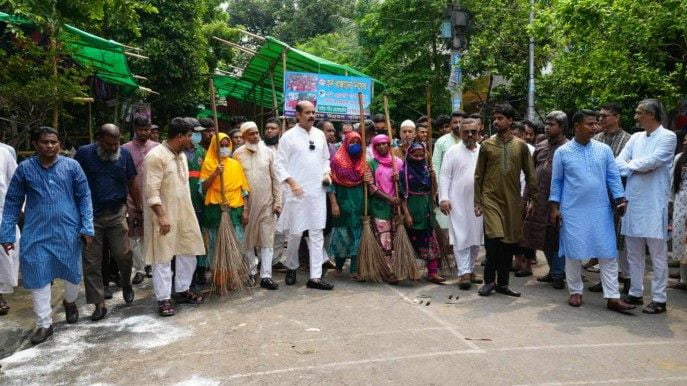
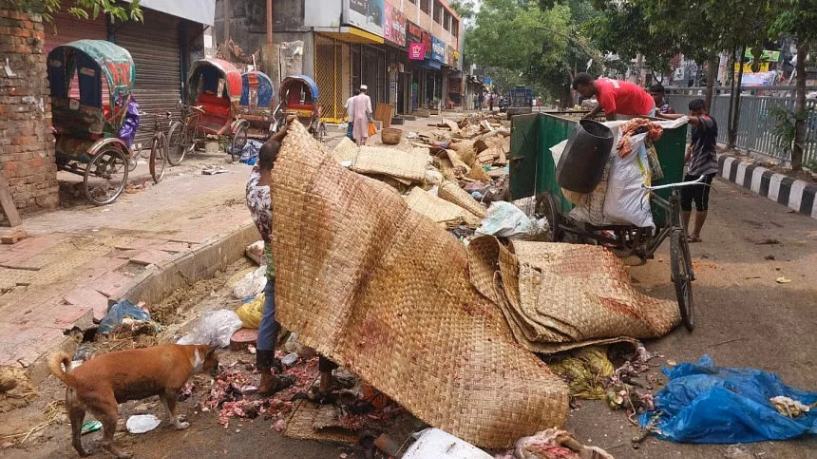
DNCC Mayor Atiqul Islam and DSCC Mayor Sheikh Fazle Noor Taposh inaugurated the waste removal works around 2 PM on Monday. Meanwhile, Dhaka South City Corporation (DSCC) removed 100% of the sacrificial animal waste in 64 of its 75 wards by 8 PM. During Eid ul-Adha, all the City Corporations efficiently manage animal waste within 24 hours through a well-coordinated plan:
Preparation
Prior to the festival, authorities allocate additional resources and personnel and conduct awareness campaigns to inform citizens about proper disposal methods. All the city corporations announce instructions through public address systems in the council-nominated wards and request people to follow these instructions. They communicate with local labor supply institutions to hire additional waste management workers. The city corporations rented around 309 additional vehicles to collect the waste from the community. to be a part of animal waste management during Eid time.
Designated Disposal Sites
Specific areas are designated for animal slaughter and waste disposal, reducing the spread of waste throughout the city. DNCC has designated 4 disposal sites, DSCC 4, KCC 5, CC 7, and BCC 3, totaling about 26 disposal sites designated by the corporations. Approximately 7,200 sacrificial animals were slaughtered at these sites.
Collection Teams
Specialized waste collection teams are deployed. No staff of city corporations took leave for Eid, and around 16,000 additional workers were recruited for cleaning Dhaka city. Other city corporations also hired additional workers. These teams worked in shifts to ensure continuous service, promptly collecting and transporting waste to designated sites.
Hotline Services
The proper animal waste management during Eid time, The Dhaka city corporations set up hotline number 16106 for waste management issues. “Action will be taken from the control room,” said the mayor after inaugurating the waste removal program. Customer service staff stayed at the city corporation office, receiving calls and passing the information to operations teams to collect waste from houses.
Sanitation Measures
Streets and public areas are thoroughly cleaned and disinfected immediately after waste collection to maintain hygiene and prevent health hazards. Workers were instructed to wash the areas after waste collection and to spray bleaching powder to ensure hygiene. All workers wore protective and hygienic clothing.
Monitoring and Supervision
The animal waste management during Eid would not be success without proper monitoring. Supervisors oversee the entire process, ensuring efficiency and addressing any issues promptly. The Waste Management Department of Dhaka North and South monitored the process with physical visits. Additionally, DNCC formed ten groups for inspection in its ten regions. Each group, led by a senior official, included key personnel from health, engineering, waste management, and other departments, who continuously monitored waste management activities across DNCC’s ten regions.
Community Involvement
Authorities encourage citizens to cooperate by using designated disposal points and following guidelines, facilitating faster waste management. DNCC designated 4 disposal sites, DSCC 4, KCC 5, CC 7, and BCC 3, totaling about 26 disposal sites designated by the corporations.
Awareness Initiatives and Timely Execution
Approximately 7,200 sacrificial animals were slaughtered at these sites. Counselors visited their elected areas to create awareness, with public announcements continuing. By completing the Eid ul-Adha prayers by 7:30 AM, the process started and finished on time.
Community Support in Managing Sacrificial Animal Waste:

The city corporations of Bangladesh sought help and provided instructions on waste management to citizens. According to field-level information, 25,29,182 animals were slaughtered in Dhaka Division, 20,57,520 in Chattogram Division, 24,26,111 in Rajshahi Division, 10,8,855 in Khulna Division, 4,28,438 in Barisal Division, 3,93,742 in Sylhet Division, and 11,72,553 in Rangpur Division. The responsibilities of community members in managing animal waste within 24 hours during Eid included:
Using Designated Disposal Sites
There were some/ limitations as not many disposal sites were available for animal slaughtering. Only 26 sites were designated across Bangladesh. 7,200 sacrificial animals were slaughtered at these sites. However, citizens slaughtered animals by the roadside drains and called the hotline number and local councilors for waste cleaning.
Following Guidelines
Adhering to city regulations and guidelines for waste disposal was crucial. Citizens obeyed the government’s rules and regulations. Even in smaller municipalities, cleaning staff visited houses to collect waste and clean as per the code of conduct.
Early Start and Timely Completion
Slaughtering started early in the morning and was completed by 2:00 PM, with waste collection starting at 2:00 PM and completed by 10:00 PM. RCC completed its task before sunrise the next day, using the hotline with patience.
Cooperating with Authorities
During Eid ul-Adha, citizens cooperated with authorities to ensure efficient animal waste management. They used designated disposal sites, streamlining the collection process. By following city guidelines and regulations for waste disposal, residents minimized health hazards and environmental impacts.
Success in 24-Hour Eid ul-Adha Waste Management
Community members promptly informed waste collection teams of any waste, facilitating timely removal. Participation in awareness campaigns educated citizens on proper practices, leading to widespread adherence and cooperation. This collective effort significantly supported the authorities’ goal of managing waste within 24 hours.
Maintaining Hygiene
Citizens maintained hygiene by responsibly managing animal waste. They used designated disposal sites for slaughter and waste, ensuring the city’s collection teams could efficiently remove it within 24 hours. Citizens adhered to guidelines provided by the city corporation, such as containing waste in appropriate bags or containers.
Maintaining Cleanliness During the Festival
They kept their surroundings clean by promptly cleaning any spills and using disinfectants. Community members actively participated in awareness campaigns, educating each other on the importance of hygiene and proper disposal practices during the festival.
Overall Outcome
The city corporation’s waste management initiative to handle animal waste within 24 hours during Eid ul-Adha proved highly effective. The initiative ensured a clean and hygienic environment, minimized health risks, and prevented unpleasant odors. Workers promptly cleaned and disinfected streets and public areas, enhancing overall public health and safety.
Quantities Collected, Community Involvement, and Improved Practices
They collected fourteen metric tons of waste from Dhaka North alone and 109 metric tons from all city corporations. Citizens themselves managed sixty percent of the total waste at the village level. The swift removal of waste also reduced the potential for pest infestations. Additionally, the initiative increased community awareness and cooperation, leading to improved waste management practices in the future. Overall, the city maintained a sanitary and pleasant environment during the festive period.
Pingback: Sustainable Waste Recovery on Farms - Carbon Revolve